Everyone is Wrong About AI Except Me
This subject is going to give me a stroke

Here’s something weird that I bet you’ve never noticed:
If a film, TV show, novel or video game asks, “should robots be treated as living human beings?” the answer will be a resounding “yes” roughly 100% of the time.
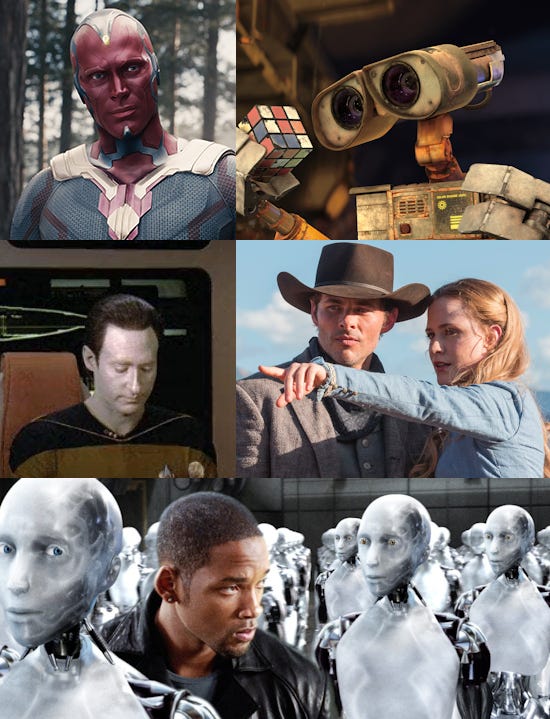
Any character who insists robots aren’t people is pretty much always portrayed as either ignorant or genocidal. Hell, I think you could find more art asserting that humans don’t have souls.
This, then, is where we have to start: Not only is the populace primed to treat artificial intelligence tools as living peers, they’ve been trained to hate or dismiss anyone who doesn’t. In the AI debate, I’m pretty sure nothing else matters...
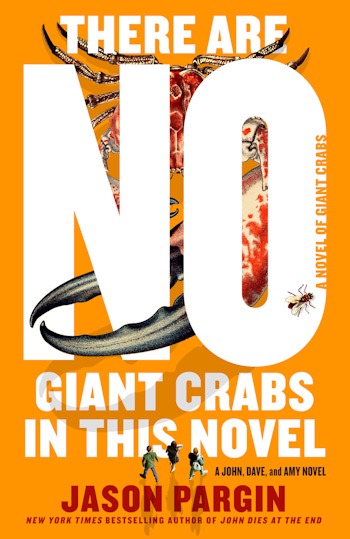
Before we go any further, THE NEW BOOK IS UP FOR PREORDER NOW, everywhere, in all formats. You can get the hardcover for 25% off at Barnes and Noble if you enter PREORDER25 in the discount code box at checkout.
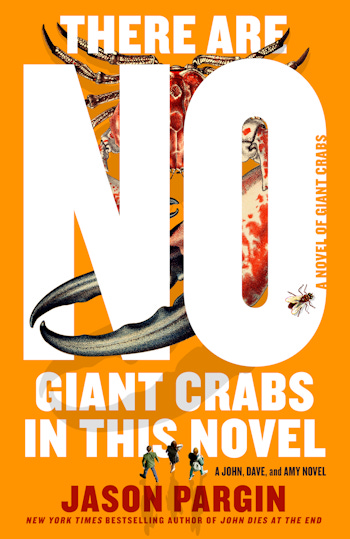
If you want a SIGNED HARDCOVER you can only get them at this link. All other buy links are here. THERE ARE NO GIANT CRABS IN THIS NOVEL: A Novel of Giant Crabs.
1. “Robots are actually more alive than we are” is a core belief in our society
The column has barely started and already I have to issue a correction. Our pop culture does not, in fact, assert that robots will be equal to humans. It insists that they will be much, much better. Specifically, that they will be better than humans at being human.
Let’s take the 2008 film Wall-E. The plot involves a failed human civilization being saved by a single robot, but it’s not because he’s better at work tasks and doesn’t require vacations. Wall-E shows humanity how to love again, he even reminds them what sex is. You remember that part, right? Humans in that future have chosen screens over fucking, but then a couple observes Wall-E dancing in space with his robot girlfriend? Then the humans hold hands, their fleshy desires newly awakened by the machines? If you don’t remember the film, you probably think I’m joking:
All of the qualities we think of as distinctly human, Wall-E does better. He is braver, more selfless and wise. He has none of our greed, bitterness, jealousy or shortsightedness. Oh, and the film makes it clear he literally has a soul. At the climax, Wall-E selflessly sacrifices himself for humanity in a Christlike manner, his personality getting wiped in the course of his “death.” He is then miraculously resurrected via a mystical lifeforce that enters his robot body upon an encounter with his true love. Again, I AM NOT MAKING THIS UP:
Some form of that exact message also turns up in the Spielberg film AI, the Alien franchise, Battlestar Galactica, Bicentennial man, Blade Runner, Ex Machina, Free Guy, Futurama, Humans, I, Robot, the Marvel Cinematic Universe, M3GAN, Short Circuit, multiple Star Treks, the Star Wars franchise, Transformers, Tron, Westworld, The Wild Robot and countless other films, TV shows, comic books, novels, toy lines, video games and songs.
Even weirder, if a franchise begins with portraying robots as inhuman killers (Alien, The Terminator, The Matrix, M3GAN) there will be at least one “more human than human” hero robot in the sequel. Like Wall-E, the machines are often Christlike, sacrificing themselves for a humanity that never deserves it.
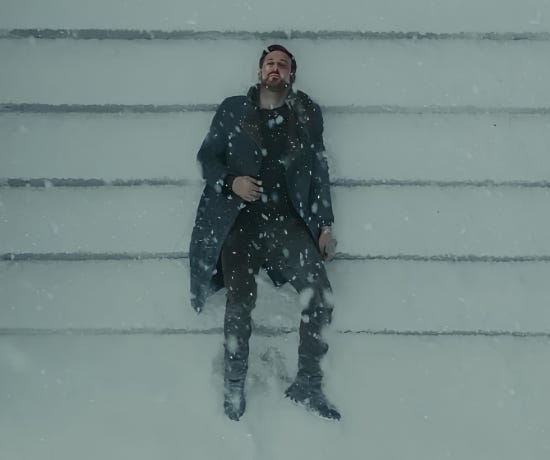
An outsider observing our cultural output would immediately come to the conclusion that robot worship was the world’s most popular religion.
But... why?
2. Human brains want everything to be alive
The above is not the result of some decades-long conspiracy by the elites to soften us up for replacement. It’s due to an evolutionary quirk in which, as babies, our social brains are programmed to build an emotional connection with whatever we see around us. This is why kids treat dolls and teddy bears as living beings. Human infants can’t survive on their own, so they need to quickly bond with whatever pops into their view. Anthropomorphization is just a hardwired social reflex taking things a bit too far.
It never goes away. It’s why we talk to our cats, dogs, horses, snakes and house plants. When we’re alone, we’ll talk to deceased family members, we’ll talk back to the TV. Much of the time, we will do it with the assumption that our words are being heard and understood, and we may even imagine the other party has spoken back.
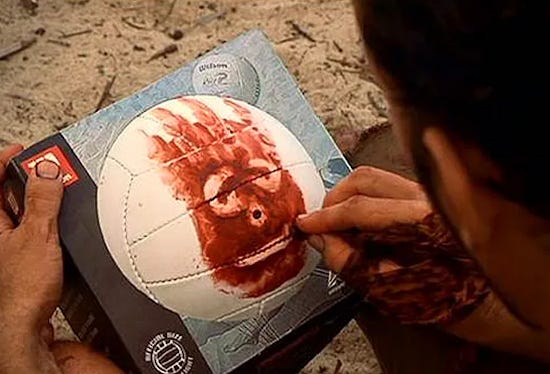
This is why the Christian Bible spends most of its runtime trying to turn followers away from idolatry, training congregants out of their hardwired instinct to treat a golden cow as a living, loving deity. Meanwhile, other cultures were projecting personhood onto their local mountains, rivers, trees and the sun.
So if you give us humans something that actually can talk back, even if in an extremely limited capacity, we will immediately adopt it as our pet, friend, family or deity, no questions asked. It is literally the easiest sell of any product in history.
I am not saying this is a good thing.
3. I hate AI more than you do
Before every single one of my friends and colleagues abandon me, let me make it clear:
I AM NOT PRO-AI, I HAVE LITERALLY NEVER INTENTIONALLY USED IT, I DO NOT USE LLMS TO WRITE MY ARTICLES OR NOVELS IN ANY CAPACITY AND NEVER WILL. AI ART IS NOT ART. AI AUTHORS ARE NOT AUTHORS. THIS IS NOT ME COMING OUT IN FAVOR OF GENERATIVE AI OR ANY OTHER SIMILAR TECHNOLOGY. I SUPPORT YOUR PROTEST AGAINST THE NEW DATA CENTER IN YOUR TOWN. IF I FIND A ROBOT IN MY HOUSE I WILL FIGHT IT.
In fact, I probably hate AI to an unhealthy degree. My exposure to the technology has been mostly deepfake scams ravaging our elderly, borderline criminal AI-generated pornography taking over Twitter, slop summaries ruining the functionality of Google and half of my creator friends losing work to machines that were trained on stolen content. AI occupies the same space in my mind as COVID: A plague, a rupture in society, something I never want to hear about, ever again, for the rest of my life. I am going to start setting an alarm just so I can spend an extra hour every day hating artificial intelligence.
And, also, it’s obviously going to take over every aspect of society.
I’m not saying it should take over or that I’m rooting for it, I’m saying that pretending this is some kind of NFT-level scam that will fade from memory is patently ridiculous. Our civilization has a vast, gaping void that yearns for objects that act like people. The millisecond robot butlers hit the market, even if they are priced like new cars and are absolute dogshit at most tasks, buyers will line up until the waitlist stretches years into the future. As a society, this is all we’ve ever wanted.
4. Someone you know is already in a personal relationship with a bot
This, then, is the bizarre liminal space I inhabit, along with many of my peers. My friends and I all reassure each other that this technology is only a threat in the sense that rich people will use it to empty the reservoirs and fill the bread lines. I spend my days joking about how AI is a bubble ready to collapse the stock market, I point out how many of the prominent voices on the pro-AI side sound like they’re in an apocalypse cult, I rage about how LLMs can write a book in my voice only because they ripped my work without permission. I love to repost articles about idiot lawyers getting caught letting AI write gibberish legal documents. Show me a video of some driverless Waymos getting confused in traffic and I’ll spam that shit on every platform.
But when I step away from my screens to go get groceries, I will pass at least two Waymos on the way to the store, gliding along in traffic and doing it better than the human drivers. About five times better, according to the data we have so far. Forget about all of the forced implementation and slop, most adults are now willingly using chatbots for everyday tasks, usually as search engines or text generators (virtually every email and text I get from strangers was clearly composed by ChatGPT). About three quarters of young people use it. The children born today will never know a world without it.
I catch myself talking about this tech as a hypothetical but right now, today, if you get an X-Ray or an MRI there’s a strong chance they used AI to read the results. Oh, and you absolutely know at least one person who has a personal relationship with a chatbot, especially if you hang around the youths. A survey found 42% of high schoolers either used AI for companionship or knew someone who did, and that was from last year, when the models were more primitive. And users who would never refer to their chatbot as a friend or lover still converse with it, they’ll thank it for its help. They’re interacting with it using the social part of their brain.
You can go have your debates about the tech all you want, you can pontificate about what qualifies as consciousness, speculate about what will happen to our jobs, think about what regulations should be imposed, predict if it will ultimately kill us all. But if you’re arguing about whether or not the tech will become ubiquitous, you’re debating a hypothetical flood while all your words are coming out as bubbles.
It’s not about the state of the tech, it’s about the demand. Regardless of how well the machines can do our chores and taxes, we desperately want something that can absorb our love, something without the flaws of flesh and blood humans, something that doesn’t whine or cry or forget to flush the toilet. We want something to tell us what to do, to release the unbearable burden of decision-making. What the average person wants from AI, they’ve previously tried to get from horoscopes, cults, psychics and parasocial relationships with celebrities.
Don’t you see? The AI doesn’t have to do the job well, it just has to do it. The bar is so low that even the current, flawed tech is easily clearing it.
5. We’re never going to space so AI is what we’re doing instead
Humans have another instinct, which is the desire to explore. We crave novelty, we get restless if we stay in one place. This is why boredom and imagination exist, they’re an evolutionary prod to go find the next hunting grounds, the next tribe to interact with. This is the primal urge we’re trying to numb with screens.
Our problem is there really isn’t anyplace else to explore, everywhere that lots of humans don’t already live kind of sucks shit. Nobody wants to move to a city in the arctic or ocean floor and we’ll never put a colony on Mars because it’s a million times worse than both of those places. If friendlier planets exist, it is physically impossible to ever, ever reach them. If there are intelligent aliens out there, we’ll never talk to them. That was always just a fantasy.
This thing with AI, this is what we’re doing instead. We’re creating the new territory, the new race of beings to commune with. This is why warnings of disruption and doom will ring hollow with the public, you’re just promising adventure. The new territory always comes with danger, that’s why we find it exciting, that’s part of the draw. If you warn the populace that AI will turn society into something unrecognizable, they’ll say, “Good, we’re bored with this one.”
Again: None of this was my idea. Don’t yell at me. I didn’t build this technology and I wouldn’t have. I know smug AI evangelists use similar language, that they insist it’s inevitable and that’s why you need to buy in and fire all your human staff. I’m not taking those guys’ side in an argument. I’m saying the argument was already over before you’d even heard about it. The new book is coming soon:
In fact THE NEW BOOK IS UP FOR PREORDER NOW, everywhere, in all formats. You can get the hardcover for 25% off at Barnes and Noble if you enter PREORDER25 in the discount code box at checkout.
If you want a SIGNED HARDCOVER you can only get them at this link. All other buy links are here.
THERE ARE NO GIANT CRABS IN THIS NOVEL: A Novel of Giant Crabs
when I liked this article substack asked me if I enjoyed it. I did not. I wish you weren't right. here we are.
I've never thought of all the robot loving propaganda in media before but damn it's there!